
Insanciklar - Fyodor Dostoyevski -
Insancıklar ( Poor Folk ) is where it all began—Dostoyevsky’s first novel, written when he was just 24, and already showing the psychological depth that would define his masterpieces. Told through a series of letters between a middle-aged, impoverished clerk named Makar Devushkin and a young, vulnerable seamstress named Varvara Dobroselova, the novel explores poverty not just as a material condition, but as a spiritual and emotional prison.
If you come to Insancıklar expecting the explosive drama of Crime and Punishment or the philosophical frenzy of Notes from Underground , you may find it quieter. But its power lies in that quietness. It is the cry of a young Dostoyevsky who already understood that hell is not just other people—it is being forgotten, invisible, and too poor to love properly. Insanciklar - Fyodor Dostoyevski
Dostoyevsky’s use of the epistolary form is masterful. Through Makar’s rambling, self-deprecating letters, we see a man discovering his own voice, his literary tastes (he is deeply moved by Gogol’s The Overcoat ), and his painful awareness of being looked down upon. Varvara’s letters, more restrained and melancholic, offer a parallel story of resignation and quiet strength. Insancıklar ( Poor Folk ) is where it
The novel’s title, Insancıklar (“Little Humans” or “Poor Folk”), says it all. These are not grand tragic heroes but the invisible ones—clerks, seamstresses, widows, and orphans—whose inner lives are as vast and complex as any prince’s. The ending is devastating, realistic, and deeply tender. There is no miracle, only the slow, inevitable separation of two souls who once saved each other. But its power lies in that quietness
Essential reading for Dostoyevsky completists and anyone who believes that the smallest lives contain the greatest stories. A tender, sorrowful, and deeply human debut.
Here’s a review of Insancıklar (the Turkish title for Dostoyevsky’s Poor Folk ) by Fyodor Dostoyevsky:
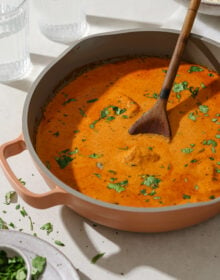
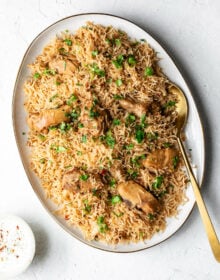
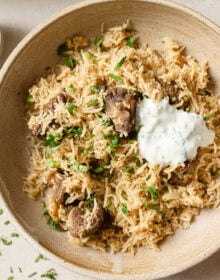


569 Comments on “Pakistani Chicken Biryani Recipe (The BEST!)”
I just wanted to let you know that I tried your Chicken Biryani recipe, and it was incredible. I followed the instructions exactly, and the results were amazing. This will definitely be my go-to recipe from now on.
Looks amazing! So happy the biryani was a success!
Big fan of your recipes Izzah! I typically use saffron in making my heavily simplified version of biryani, do you think that would be a wise substitution for food coloring? The recipe is so methodical and precise, I wouldn’t want to make any hasty substitutions!
Thanks so much, Abeera! Yes, that’d be perfectly fine. Would love to hear how it turns out!
Hi – I made the biryani recipe and it turned out well. However, I feel the quintessential biryani aroma (I’ve eaten a lot of biryani in my lifetime and I only smelled it once when my parent’s Pakistani friend made biryani when I was a kid) was missing. Would using stone flower (dagad phool), which is used by some chefs, provide this aroma and umami boost to the biryani? Is there a reason why you don’t use it in your recipe? Thank you!
That’s such an interesting note, Wess! I’m so curious to know what she used. I have never tried dagad phool, but there’s actually a biryani flavoring essence that you can buy and use in place of kewra. Perhaps that’s what she used? Hope that helps!
Hi, Izzah.
You may be right. My sincere apologies, perhaps I did have a different flavour profile in mind. I read the many positive reviews of others too, so they definitely really like it. Keep up the good work.