
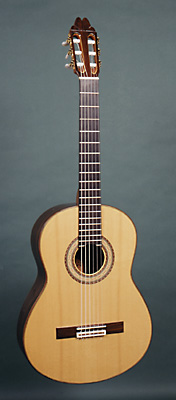
Welcome to the fantastic world of classical guitar. In this site, you will find classical guitar pieces, in midi format, for one and more guitars: actually 5641 MIDI files from 96 composers. Information on how to create midi files and a tutorial on the tablature notation system is presented. Images of ancient guitars provided.
|
|
This paper asks: How does a simple audio file produce a compelling tactile and spatial illusion, and why did YouTube become the perfect medium for its virality? We argue that the Virtual Haircut succeeded because YouTube provided a low-friction, headphone-native platform that turned a private psychoacoustic test into a shared, comment-driven social event. The Virtual Haircut exploits the human auditory system’s built-in mechanisms for spatial localization. Unlike standard stereo music, which creates a "pan pot" effect (sound moving left/right), binaural recording uses two microphones placed inside a dummy head with ear canals.
[Your Name] Course: [e.g., Psychology of Sensory Perception / Digital Media Studies] Date: [Current Date] 1. Abstract The "Virtual Haircut" is a seminal binaural audio recording that creates a realistic illusion of a haircut scenario using only stereo headphones. Originally a demonstration of human sound localization, its proliferation via YouTube (circa 2007–2012) transformed it from a niche psychoacoustic test into a viral sensory phenomenon. This paper analyzes the psychoacoustic principles behind the illusion (Interaural Time Differences, Head-Related Transfer Functions), examines the role of YouTube as a distribution platform that enabled mass participation, and discusses the implications for ASMR (Autonomous Sensory Meridian Response) and spatial audio technologies like VR. The case of the Virtual Haircut illustrates how a technical demonstration became a cultural touchstone for embodied digital experience. 2. Introduction Imagine feeling scissors snip next to your ear, a comb run through your hair, and a barber whispering from your left—all while sitting alone in a room. This is the promise of the "Virtual Haircut." First created by QSound Labs in the 1990s as a demo for binaural recording technology, the track found a second life on YouTube. For millions of viewers, the experience was startling: despite knowing it was an illusion, listeners would instinctively duck, shiver, or turn their heads.
The illusion demonstrated that hearing is not a passive receiver but an active, constructive process. Listeners reported proprioceptive shifts (feeling hair move) and autonomic responses (increased heart rate when the barber leaned close).
Composers are grouped in 6 pages: A-B;
C-F;
G-L;
M-O;
P-R; S-Z .
J.-S.
Bach , A.
Barrios Mangore , N. Coste
, M. Giuliani , F.
Sor and F.
Tarrega are on their own page
Click here
to listen to 20 great MIDI from the site
Composers in alphabetical order
This paper asks: How does a simple audio file produce a compelling tactile and spatial illusion, and why did YouTube become the perfect medium for its virality? We argue that the Virtual Haircut succeeded because YouTube provided a low-friction, headphone-native platform that turned a private psychoacoustic test into a shared, comment-driven social event. The Virtual Haircut exploits the human auditory system’s built-in mechanisms for spatial localization. Unlike standard stereo music, which creates a "pan pot" effect (sound moving left/right), binaural recording uses two microphones placed inside a dummy head with ear canals.
[Your Name] Course: [e.g., Psychology of Sensory Perception / Digital Media Studies] Date: [Current Date] 1. Abstract The "Virtual Haircut" is a seminal binaural audio recording that creates a realistic illusion of a haircut scenario using only stereo headphones. Originally a demonstration of human sound localization, its proliferation via YouTube (circa 2007–2012) transformed it from a niche psychoacoustic test into a viral sensory phenomenon. This paper analyzes the psychoacoustic principles behind the illusion (Interaural Time Differences, Head-Related Transfer Functions), examines the role of YouTube as a distribution platform that enabled mass participation, and discusses the implications for ASMR (Autonomous Sensory Meridian Response) and spatial audio technologies like VR. The case of the Virtual Haircut illustrates how a technical demonstration became a cultural touchstone for embodied digital experience. 2. Introduction Imagine feeling scissors snip next to your ear, a comb run through your hair, and a barber whispering from your left—all while sitting alone in a room. This is the promise of the "Virtual Haircut." First created by QSound Labs in the 1990s as a demo for binaural recording technology, the track found a second life on YouTube. For millions of viewers, the experience was startling: despite knowing it was an illusion, listeners would instinctively duck, shiver, or turn their heads. virtual haircut youtube
The illusion demonstrated that hearing is not a passive receiver but an active, constructive process. Listeners reported proprioceptive shifts (feeling hair move) and autonomic responses (increased heart rate when the barber leaned close). This paper asks: How does a simple audio
Note to MIDI sequence contributors
Your submissions are welcomed.
Please send them by e-mail (end of text). Pieces
should bear the composer's name and be properly identified.(ex.: J.K. Mertz (1806-1856) Nocturne
Op.4 No.2.). The submissions
should bear information on the transcriber or arranger when available. The submitter's name
will appear beside the accepted submission.
This site exists primarily to showcase pieces written for the classical
guitar. Established and recognized transcriptions and arrangements (e.g.,
Tarrega, Segovia,..) of pieces written by non-guitar composers will also be given
high priority.
New compositions for the classical guitar are also welcomed. New
compositions that meet quality guidelines will be added to the site. For
new contributors, it would be appreciated if you would also submit several
pieces by known composers in addition to your own compositions. This will
help to expand the repertoire of established works for the classical guitar in
addition to expanding the repertoire of new music.
Last update: March 8 2026
Copyright François Faucher 1998-2025
 G.F.Handel's Sonata 2. Allegro
3.Adagio HWV368
G.F.Handel's Sonata 2. Allegro
3.Adagio HWV368