










It is not possible for me to directly open, extract, or analyze the contents of a file named Friendship-With-Benefits.rar as I am a text-based AI with no access to your local files or external archives.
Beyond the risk of unrequited love, the FWB model is plagued by a series of "invisible contracts" and unspoken rules. Questions that would be explicit in a traditional relationship become sources of silent anxiety: How often do we text? Is it acceptable to see other people? What happens if one of us catches feelings? Do we still hang out without sex? The attempt to maintain a "no-strings-attached" dynamic within a friendship is paradoxical; the strings are simply hidden, lying in wait to trip both parties. Jealousy, for instance, does not require a marriage certificate. When a close friend who has been a sexual partner begins dating someone new, the emotional fallout can be far more complex and painful than seeing a casual acquaintance do the same. The friendship, once a refuge, becomes a minefield of comparisons and resentments.
However, based on the filename, I can provide a complete, standalone essay on the topic of as a social and psychological phenomenon. You can save or compile this text as needed. The Ambiguous Tapestry: An Essay on Friendship with Benefits In the landscape of modern intimacy, the traditional binary of "just friends" versus "in a romantic relationship" has given way to a spectrum of nuanced connections. Among these, the "Friendship with Benefits" (FWB) arrangement stands out as one of the most compelling, yet precarious, social experiments of our time. It is a relationship defined by its central contradiction: the attempt to graft the physical intensity of a lover onto the emotional safety of a friend. While it promises liberation from the constraints of monogamous commitment, an FWB arrangement ultimately navigates a treacherous middle ground, offering unique rewards but demanding a level of emotional discipline that often contradicts human nature.
Ultimately, the "Friendship with Benefits" is a mirror reflecting contemporary anxieties about intimacy. It represents a desire to have it all—the warmth of a friend and the heat of a lover—without the vulnerability of a commitment. It is a pragmatic rebellion against the rigid scripts of courtship. However, the very qualities that make friendship valuable—loyalty, depth, and emotional availability—are difficult to quarantine away from the physical realm. In trying to borrow the pleasures of romance without its risks, the FWB often ends up depleting the very friendship it sought to preserve. The wisest approach to this arrangement, then, is not to embrace it casually, but to enter it with the same gravity as any significant relationship. For in the quiet aftermath, when the benefits have ended, it is the friendship that you will either have saved or lost.
Yet, to paint FWB as a universally doomed arrangement would be a disservice to the diversity of human experience. There are documented cases of successful FWB relationships, though they are the exception rather than the rule. Success typically hinges on three rare conditions: absolute, radical honesty; a low baseline of romantic attraction; and a clear, mutual expiration date or transition plan. For example, two people who are genuinely incompatible as life partners—due to life goals, geography, or values—but who enjoy each other’s company and physicality might sustain an FWB for a season. Additionally, friends who have known each other for so long that the "romantic window" has permanently closed may navigate this terrain successfully. The key is a shared, unshakable understanding that the arrangement is a temporary supplement to their lives, not the main narrative.
The AAC Language Lab offers real-life solutions in support of language development. Explore language stages and interactive materials designed for Speech Language Pathologists (SLPs), Educators and Parents. An annual subscription provides full access to all materials including guided lesson plans, an activities section, a language screener, implementation tips and more.
With over 50 years of experience in augmentative and alternative communication (AAC) PRC-Saltillo is pleased to offer this unique online resource.
We have made our service even better with all the new features and a lower price. For just $19.95 a year, you will have access to all of these valuable resources. Friendship-With-Benefits.rar
It is not possible for me to directly open, extract, or analyze the contents of a file named Friendship-With-Benefits.rar as I am a text-based AI with no access to your local files or external archives.
Beyond the risk of unrequited love, the FWB model is plagued by a series of "invisible contracts" and unspoken rules. Questions that would be explicit in a traditional relationship become sources of silent anxiety: How often do we text? Is it acceptable to see other people? What happens if one of us catches feelings? Do we still hang out without sex? The attempt to maintain a "no-strings-attached" dynamic within a friendship is paradoxical; the strings are simply hidden, lying in wait to trip both parties. Jealousy, for instance, does not require a marriage certificate. When a close friend who has been a sexual partner begins dating someone new, the emotional fallout can be far more complex and painful than seeing a casual acquaintance do the same. The friendship, once a refuge, becomes a minefield of comparisons and resentments. It is not possible for me to directly
However, based on the filename, I can provide a complete, standalone essay on the topic of as a social and psychological phenomenon. You can save or compile this text as needed. The Ambiguous Tapestry: An Essay on Friendship with Benefits In the landscape of modern intimacy, the traditional binary of "just friends" versus "in a romantic relationship" has given way to a spectrum of nuanced connections. Among these, the "Friendship with Benefits" (FWB) arrangement stands out as one of the most compelling, yet precarious, social experiments of our time. It is a relationship defined by its central contradiction: the attempt to graft the physical intensity of a lover onto the emotional safety of a friend. While it promises liberation from the constraints of monogamous commitment, an FWB arrangement ultimately navigates a treacherous middle ground, offering unique rewards but demanding a level of emotional discipline that often contradicts human nature.
Ultimately, the "Friendship with Benefits" is a mirror reflecting contemporary anxieties about intimacy. It represents a desire to have it all—the warmth of a friend and the heat of a lover—without the vulnerability of a commitment. It is a pragmatic rebellion against the rigid scripts of courtship. However, the very qualities that make friendship valuable—loyalty, depth, and emotional availability—are difficult to quarantine away from the physical realm. In trying to borrow the pleasures of romance without its risks, the FWB often ends up depleting the very friendship it sought to preserve. The wisest approach to this arrangement, then, is not to embrace it casually, but to enter it with the same gravity as any significant relationship. For in the quiet aftermath, when the benefits have ended, it is the friendship that you will either have saved or lost. Is it acceptable to see other people
Yet, to paint FWB as a universally doomed arrangement would be a disservice to the diversity of human experience. There are documented cases of successful FWB relationships, though they are the exception rather than the rule. Success typically hinges on three rare conditions: absolute, radical honesty; a low baseline of romantic attraction; and a clear, mutual expiration date or transition plan. For example, two people who are genuinely incompatible as life partners—due to life goals, geography, or values—but who enjoy each other’s company and physicality might sustain an FWB for a season. Additionally, friends who have known each other for so long that the "romantic window" has permanently closed may navigate this terrain successfully. The key is a shared, unshakable understanding that the arrangement is a temporary supplement to their lives, not the main narrative.

Students can do a variety of Earth Day related activities.
Stage Four - Add More WordsLearn successful speech strategies with one of our lesson plans

This month we’re exploring how we can send kind, silly, or funny mes...
Stage All - All LevelsGet excited about AAC with activities that make learning fun
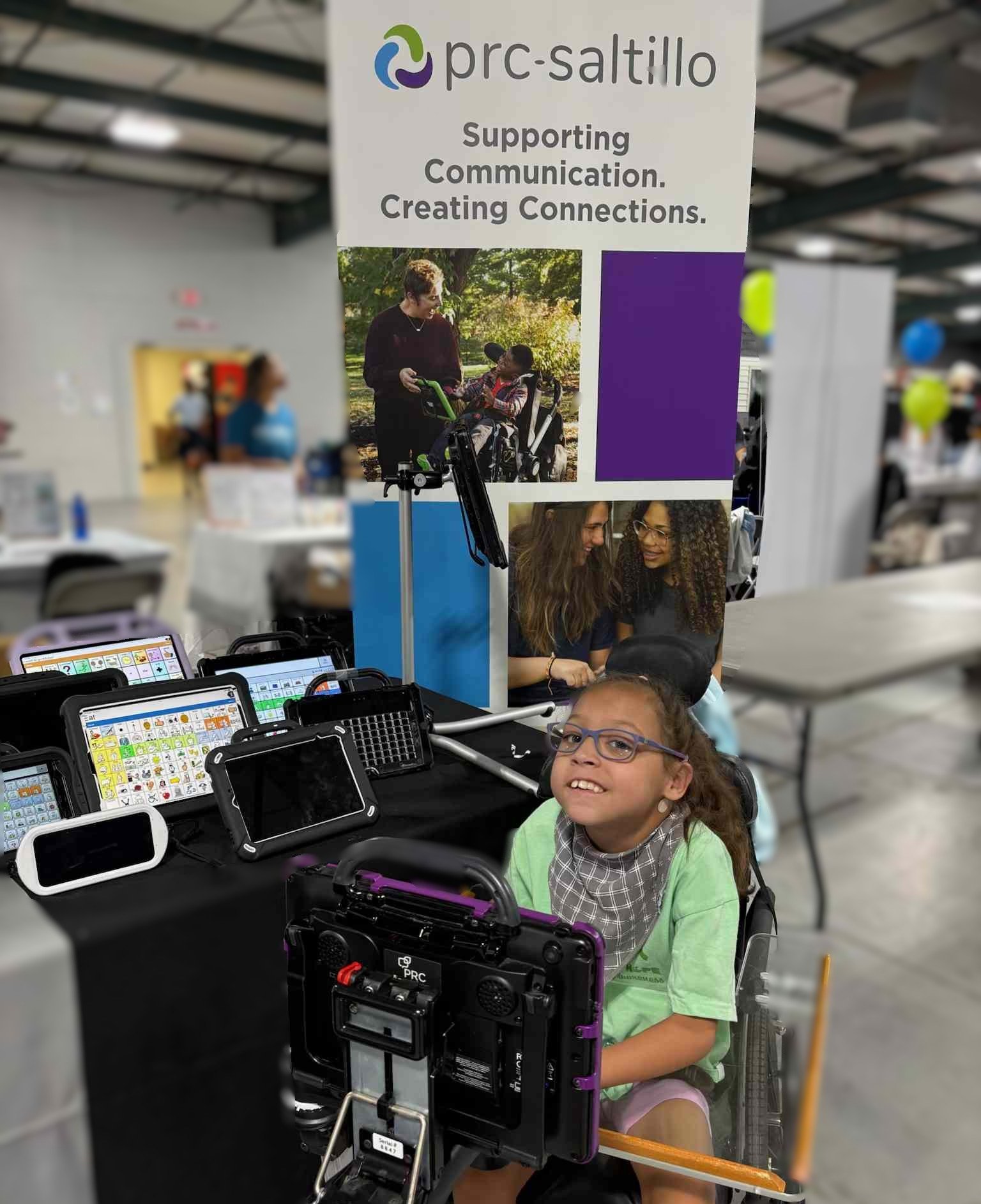
by Naiya Daves, PRC-Saltillo Ambassador This summer I did a 3 w...
Blog Post - Dec 02 2025Read the latest blogs and find out what's going on in the AAC community

The student will speak using single words.
Stage One - Use Single WordsSee this month's most popular lesson plan
Encourage the student to direct the behavior of others using negatives...
Stage One - Express NegativesSee this month's most popular activity