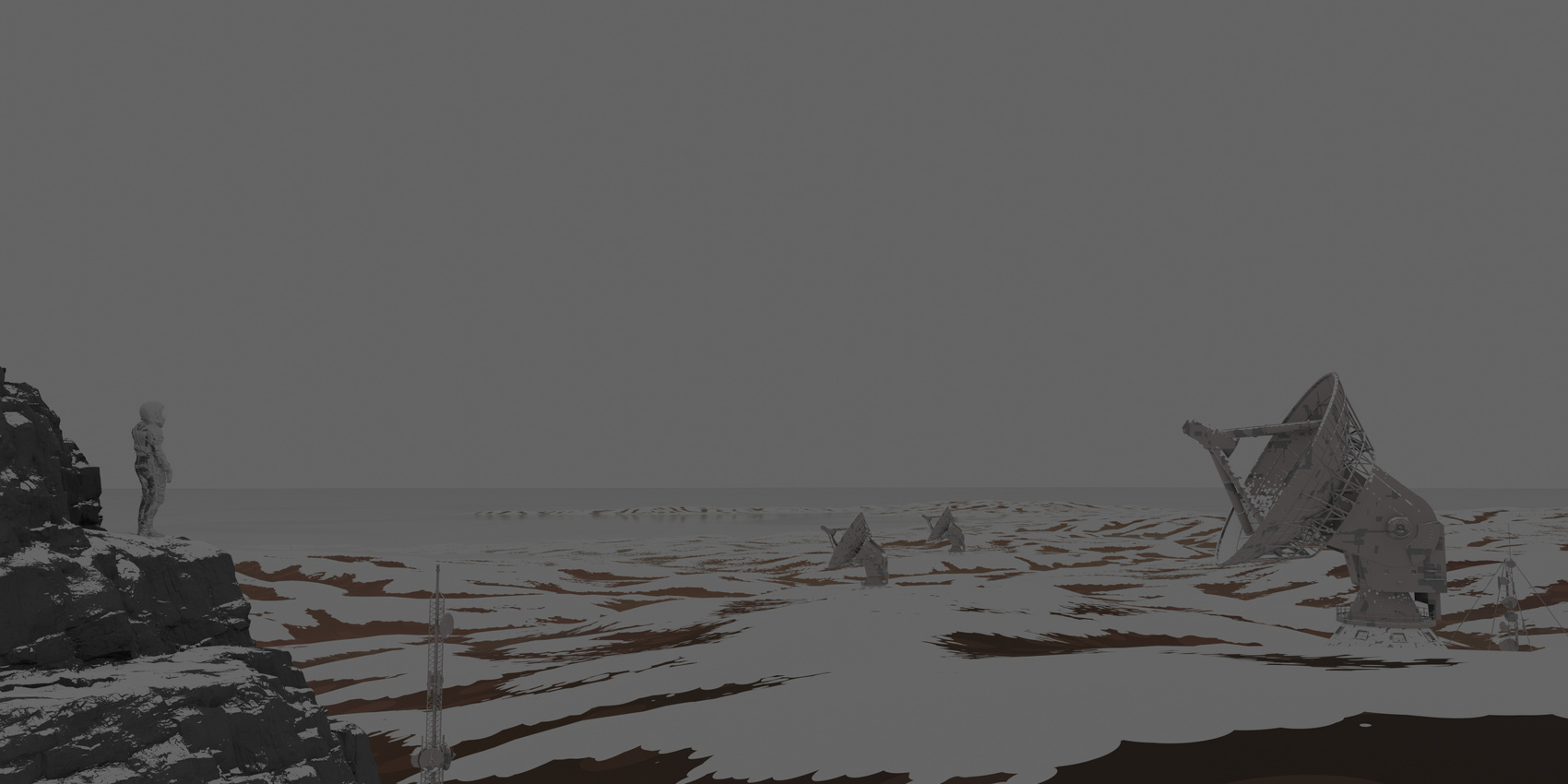





































This addon saves hours that usually are invested in manually creating sky, atmosphere and placing sun object and stars, and automates it within a single click.
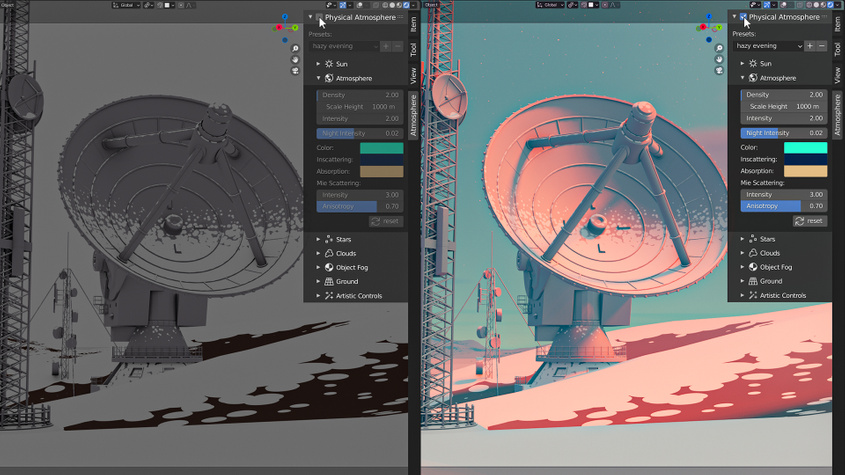
We have more than a decade of experience with atmosphere rendering techniques in computer graphics industry. Physical Starlight and Atmosphere addon is used in entertainment, film, automotive, aerospace and architectural visualisation industries.

Presets allow to store a snapshot of your customized atmosphere settings and return to it later or use already predefined presets provided by the addon.

We use a procedural method of calculating the atmosphere based on many tweakable parameters, so that sky color is not limited only to the Earth's atmosphere.

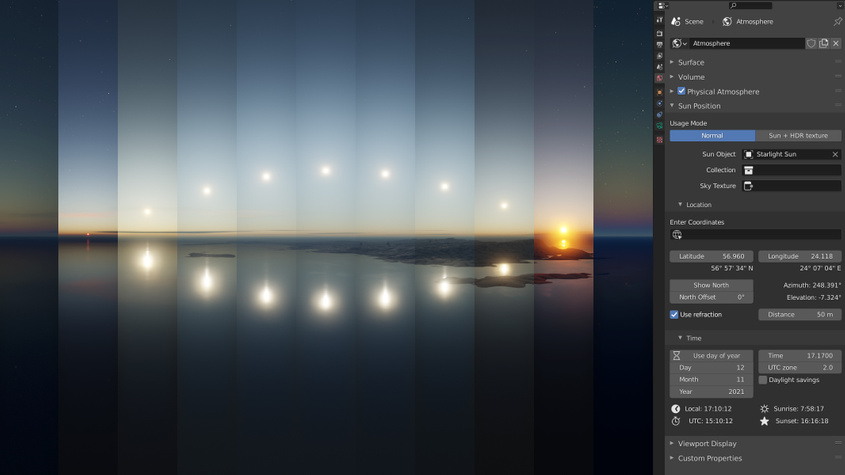
Works well in combination with Blender Sun Position addon. You can simulate any weather at any time.

"Physical Starlight and Atmosphere has been an invaluable tool for me in my personal/professional work and a huge missing link for lighting in Blender. It still feels like magic every time I use it, I can't recommend it highly enough!"

"Physical Starlight and Atmosphere has been an essential add-on for all of my environmental design projects. It gives me such incredibly flexibility and control over the look and feel of my renders. Lighting is key for any project, and this add-on always gives my work that extra edge."

"As a lighting artist, focusing on the overall mood of an image is super important. Physical Starlight and Atmosphere is based on reality, so I can spend all of my time iterating on the look without worrying about how to achieve it. "

"I love the tool. It has been my go-to since I picked it up a couple of months ago."

"My work life has become super easier since I started using Physical Starlight and Atmosphere, it cut down a lot of technical headache associated with setting up a believable lighting condition and gave me more time to concentrate on the creative part of my design process."
The filename ends with an ellipsis ("WEB-D..."), suggesting an incomplete download or a truncated record. This is a fitting metaphor for what piracy does to a film’s economic lifecycle. When a viewer downloads Dorod.AKA.Dard for free, they are completing the theft of the film’s final, most valuable asset: its revenue. For a low-to-mid-budget Bengali film, every lost ticket or legitimate stream hurts. It reduces the ability to fund the next project, lowers the actor’s quote, and discourages international distributors from picking up Bengali content. The filename, in its cold efficiency, represents a small death for an already fragile ecosystem.
Why does a Bengali film from 2024 end up as a pirated file? The year 2024 continues a trend where regional Indian cinema—Bengali, Marathi, Punjabi—struggles for theatrical screens dominated by Bollywood and Hollywood blockbusters. For many Bengali films, the window between a theatrical release and a digital premiere on a legal OTT (Over-The-Top) platform like Hoichoi, Zee5, or Chorki can be weeks or months. Piracy fills the impatient gap. A viewer in rural West Bengal or among the global Bengali diaspora in the UK or UAE might turn to a file like this because the film is either not playing near them, or they cannot afford multiple streaming subscriptions. However, this accessibility is a Faustian bargain. Dorod.AKA.Dard.2024.Bengali.1080p.iScreen.WEB-D...
Here is the essay. In the digital age, the act of watching a film often begins not in a dark theater, but with a double-click on a cryptic string of text. Consider the string: Dorod.AKA.Dard.2024.Bengali.1080p.iScreen.WEB-D... At first glance, it is merely a technical label for a data file. However, upon closer inspection, this filename serves as a cultural artifact—a roadmap that reveals the aspirations of Bengali cinema, the globalized hunger for regional content, and the festering wound of digital piracy that threatens to undermine the very industry it feeds. The filename ends with an ellipsis ("WEB-D
This filename likely refers to a pirated copy of a 2024 Bengali film titled Dorod (also known as Dard ). Since no official critical consensus or plot summary for a 2024 film by that exact name is widely available in public databases as of my last update, I will write an analytical essay based on For a low-to-mid-budget Bengali film, every lost ticket
The specifications "1080p" and "WEB-DL" are the most seductive elements of the filename. "1080p" promises high-definition visual fidelity—the way the director intended the film to be seen, with crisp shadows and vibrant colors. "WEB-DL" (Web Download) indicates that the source is a legitimate streaming platform's file, ripped directly. The "iScreen" tag likely refers to a specific release group. This technical jargon assures the potential pirate that they are not getting a shaky, blurry camcorder recording. They are getting a "clean copy." This paradox is central to the ethics of modern viewing: the pirate seeks the premium experience without the premium price, stealing the very quality that cost the filmmakers time, money, and skill to produce.
Dorod.AKA.Dard.2024.Bengali.1080p.iScreen.WEB-D... is not just a file. It is a symptom. It tells the story of a film caught between artistic ambition and market reality. It highlights the desire of a global audience to stay connected to their linguistic heritage, and it exposes the industry's failure to provide affordable, immediate, and convenient access to that heritage. Ultimately, every time such a filename is clicked, the "dorod" (pain) the film intends to depict on screen is mirrored by the real pain felt by the artists off screen. To truly appreciate a film like Dorod , one must move past the file name and pay for the experience—because the only legitimate copy is the one that respects the wound that cinema, at its best, tries to heal.
The title Dorod (or Dard in Hindi/Urdu) translates to "pain," "sympathy," or "compassion." In the context of Bengali melodrama and social realism, such a title promises an exploration of emotional suffering, likely set against the backdrop of contemporary Bangladesh or the Bengali diaspora. The use of the slash ("AKA") indicates a struggle for marketability—using a Hindi synonym ( Dard ) to attract a wider North Indian audience. This linguistic hybridity points to the constant negotiation regional filmmakers must perform: staying true to Bengali roots while courting the massive Hindi-speaking market.