


It is something you are . So, bolo... ab tumhe kaise chahun? Or have you already answered by being the question itself?
Because love, at its most absolute, is not something you do .
Similarly, the lover here has undergone a quiet, non-religious fana . The "I" has not disappeared, but the boundary between self and other has dissolved. The tragedy? Human love was not designed for such completion. It thrives on distance, on longing, on the sweet ache of the unattainable. When attainment becomes total, the lover is left mute, holding a heart that beats the beloved's name but has no mouth to speak it. In an age of hyper-connectivity, this line feels eerily contemporary. We scroll through photos of our beloveds; we keep them in our DMs, our notifications, our locked folders. They are "in our eyes" (on our screens) and "in our hearts" (on our minds) 24/7. And yet, we still ask: How do I love you now? Dil Me Ho Tum Aankhon Mein Tum Bolo Tumhe Kaise Chahu
In the end, the line is not a question waiting for an answer. It is a koan—a paradoxical riddle meant to break the mind's habit of separating lover, loving, and beloved. When you truly sit with "Dil me ho tum, aankhon mein tum," the only response is a quiet laugh and a deeper surrender.
This is not love as relationship. This is love as ontology —a state of being where self and other blur. The plea—"Tell me how to love you"—is the cry of someone rendered helpless by completeness. Normally, loving involves gestures: writing a letter, stealing a glance, whispering a name. But if the beloved is already in your eyes, what new glance can you steal? If they are already in your heart, what deeper feeling can you summon? It is something you are
To love is to seek. To desire is to feel absence. But what happens when the absence collapses? When the beloved is not just the object of your affection but the very lens through which you see the world? The line divides the human experience into two realms: the internal (dil/heart) and the external (aankhon/eyes). In most relationships, there is a separation—someone lives in your heart (memory, emotion, longing), while your eyes see a world of others, of objects, of separation.
The question reveals a terrifying truth: Not because love dies, but because it becomes indistinguishable from living. To breathe is to love. To see is to adore. To think is to remember. There is no separate act called "loving" anymore. Or have you already answered by being the question itself
But here, the poet declares a total occupation. The beloved is not in the heart as a memory; they are the heart's current occupant, its pulse, its very rhythm. Simultaneously, they are not seen by the eyes; they constitute the field of vision. To look outward is to see them. To look inward is to feel them.
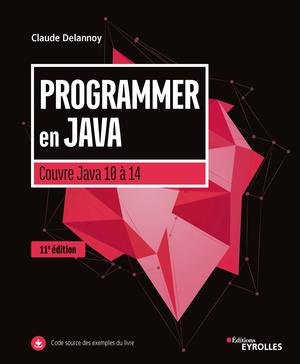

Author(s): Delannoy, Claude
Publisher: Eyrolles
Collection: NOIRE
Pub. Date: 2020
pages: 993
ISBN: 978-2-416-00018-8
eISBN: 978-2-212-44222-9
Edition: 11
This book is available in the following collection(s): Analyse des Données - Commerce International - Economie de l'Afrique - Economie de l'Energie - Economie des Inégalités



Copyright © 2026 Lively Modern Realm


