Open source RGB lighting control that doesn't depend on manufacturer software


One of the biggest complaints about RGB is the software ecosystem surrounding it. Every manufacturer has their own app, their own brand, their own style. If you want to mix and match devices, you end up with a ton of conflicting, functionally identical apps competing for your background resources. On top of that, these apps are proprietary and Windows-only. Some even require online accounts. What if there was a way to control all of your RGB devices from a single app, on both Windows and Linux, without any nonsense? That is what OpenRGB sets out to achieve. One app to rule them all.


Version 1.0rc2, additional downloads and versions on Releases page

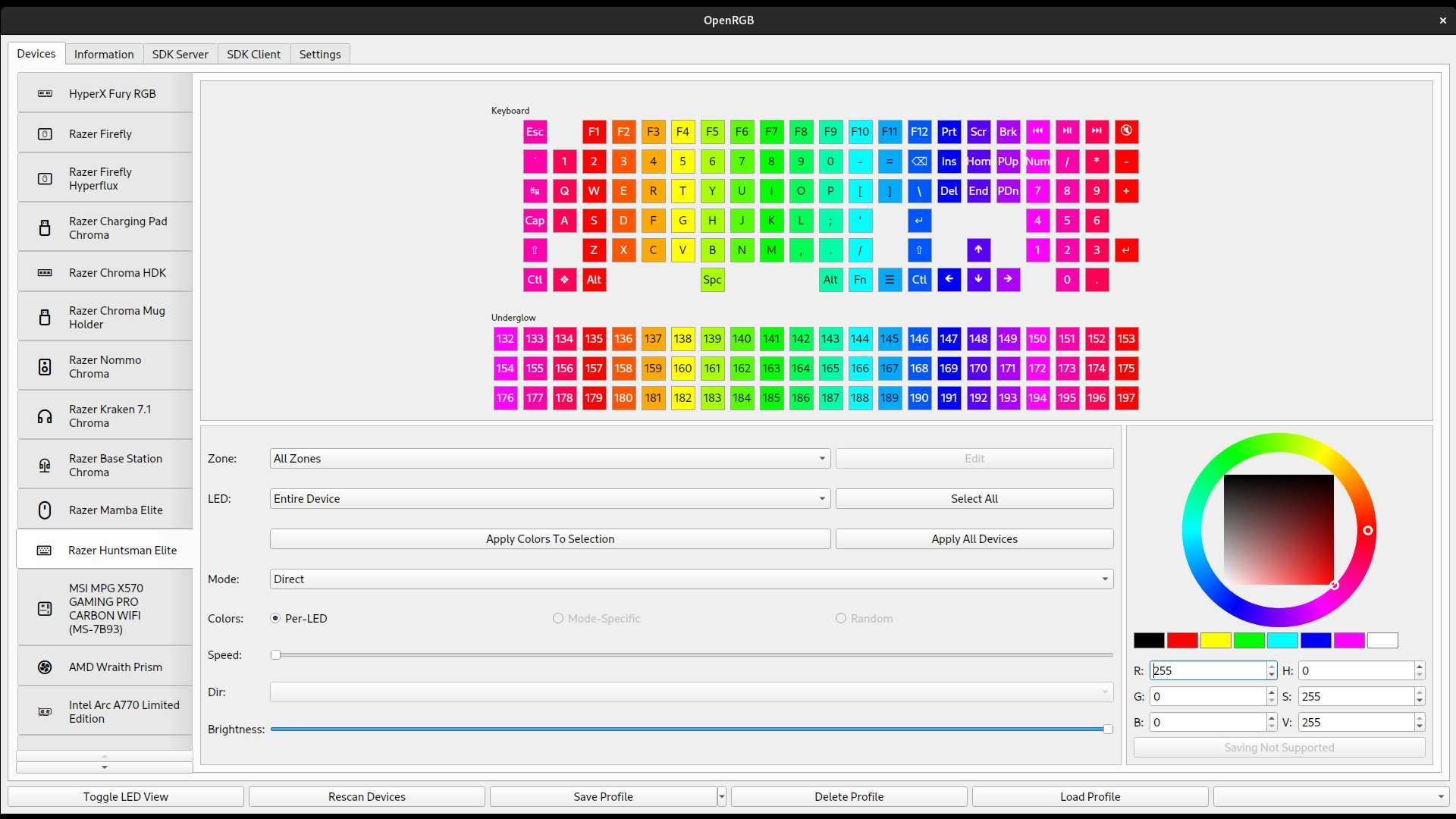
OpenRGB user interface

Control RGB without wasting system resources

Lightweight User Interface

OpenRGB keeps it simple with a lightweight user interface that doesn't waste background resources with excessive custom images and styles. It is light on both RAM and CPU usage, so your system can continue to shine without cutting into your gaming or productivity performance.
OpenRGB rules them all

Control RGB from a single app

Eliminate Bloatware

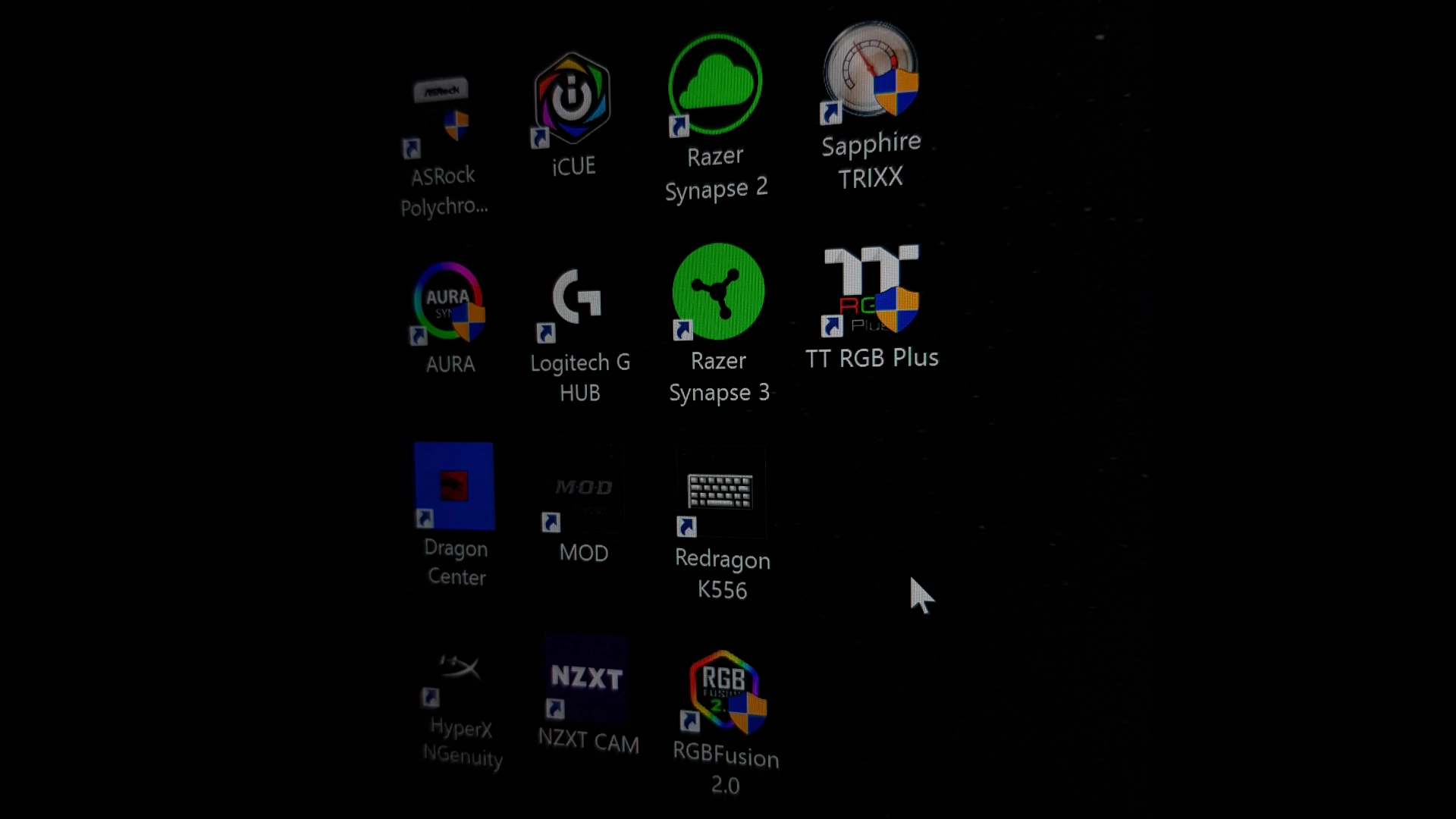
If you have RGB devices from many different manufacturers, you will likely have many different programs installed to control all of your devices. These programs do not sync with each other, and they all compete for your system resources. OpenRGB aims to replace every single piece of proprietary RGB software with one lightweight app.

OpenRGB is open source software

Contribute your RGB devices

Open Source

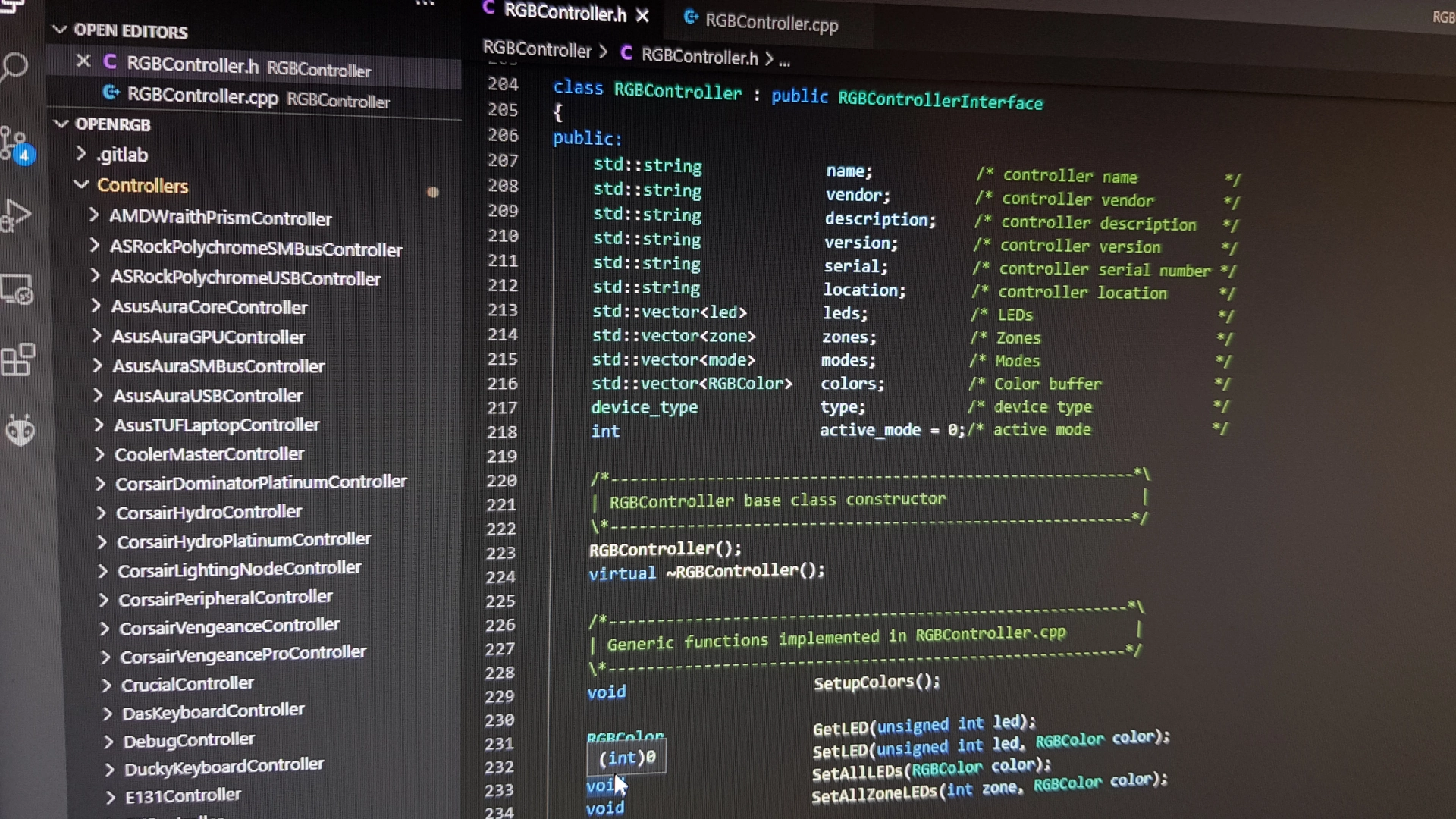
OpenRGB is free and open source software under the GNU General Public License version 2. This means anyone is free to view and modify the code. If you know C++, you can add your own device with our flexible RGB hardware abstraction layer. Being open source means more devices are constantly being added!


Check out the source code on GitLab
OpenRGB is Cross-Platform

Control RGB on Windows, Linux, and MacOS

Cross-Platform

OpenRGB runs on Windows, Linux and MacOS. No longer is RGB control a Windows-exclusive feature! OpenRGB has been tested on X86, X86_64, ARM32, and ARM64 processors including ARM mini-PCs such as the Raspberry Pi.

Cisco Ccna Lab Guide Neil Anderson Pdf May 2026

However, I can provide you with a based on what is publicly known about Neil Anderson’s CCNA lab resources, his teaching methodology, and how his lab guide compares to standard CCNA exam topics (200-301). You can use this as a template or a purchasing/research guide. Report: Evaluation of "Cisco CCNA Lab Guide" by Neil Anderson Prepared for: CCNA Candidates / Networking Students Date: [Current Date] Subject: Overview, Content Structure, and Utility of Neil Anderson’s Lab Guide 1. Executive Summary Neil Anderson is a well-known instructor (owner of FlackBox and co-instructor for How to Master CCNA on Udemy). His lab guide is not an official Cisco document but a supplementary hands-on lab workbook. It is widely praised for its real-world focus , clear instructions , and Packet Tracer / GNS3 / EVE-NG compatibility .

★★★★☆ (4.5/5) – loses half a point due to lack of theory and reliance on external platforms for lab files. If you already have the PDF and want help understanding or troubleshooting a specific lab from it, paste the lab objective or a snippet of the config, and I will explain the concept or verify the commands. cisco ccna lab guide neil anderson pdf

I cannot develop a full report on a specific PDF like "Cisco CCNA Lab Guide by Neil Anderson" because I do not have access to that copyrighted file, nor can I browse the live internet or your local storage to locate or verify its contents. However, I can provide you with a based