
A cross platform, customizable graphical frontend for launching emulators and managing your game collection.
A cross platform, customizable graphical frontend for launching emulators and managing your game collection.
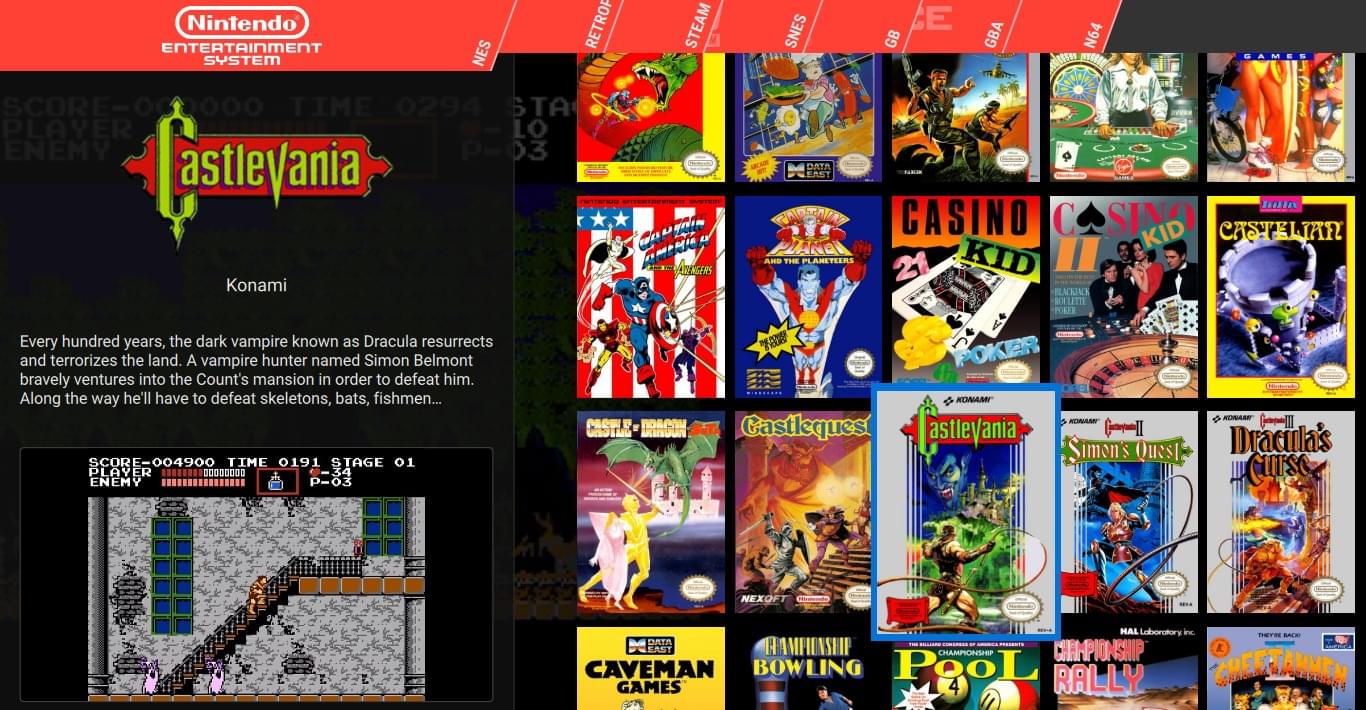
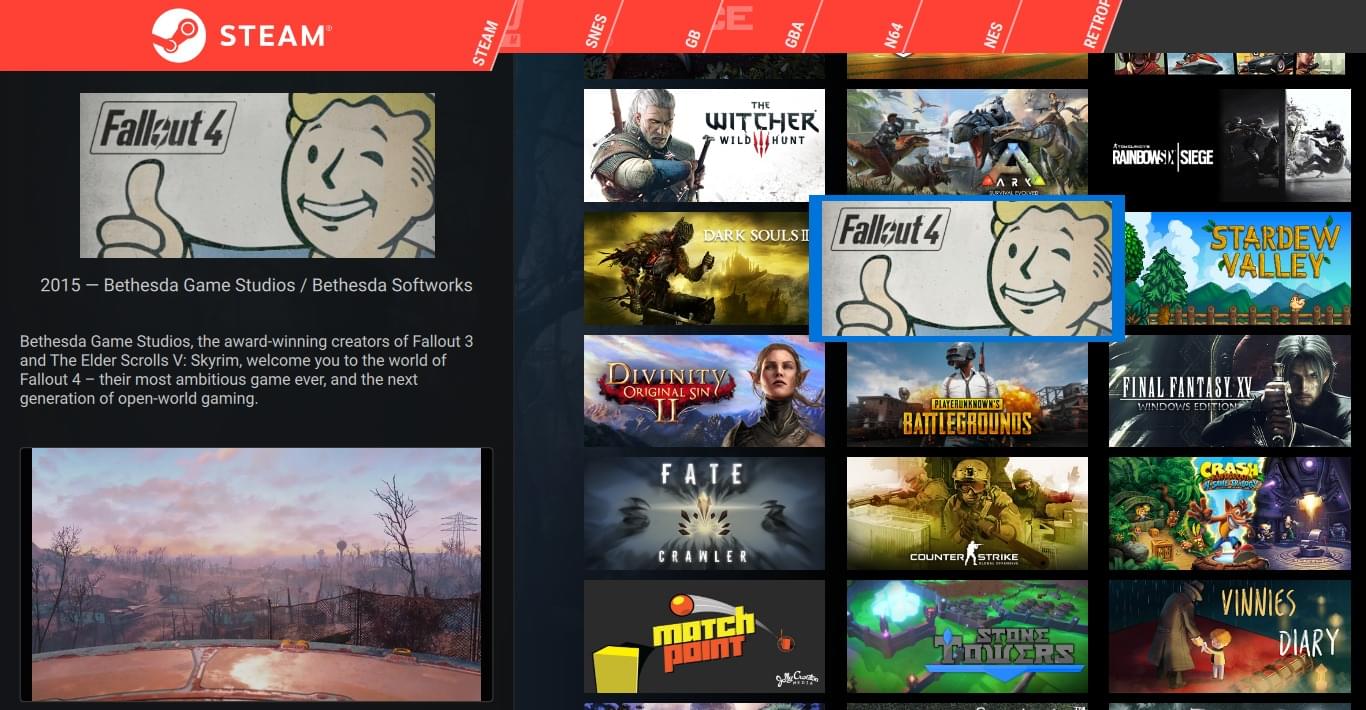
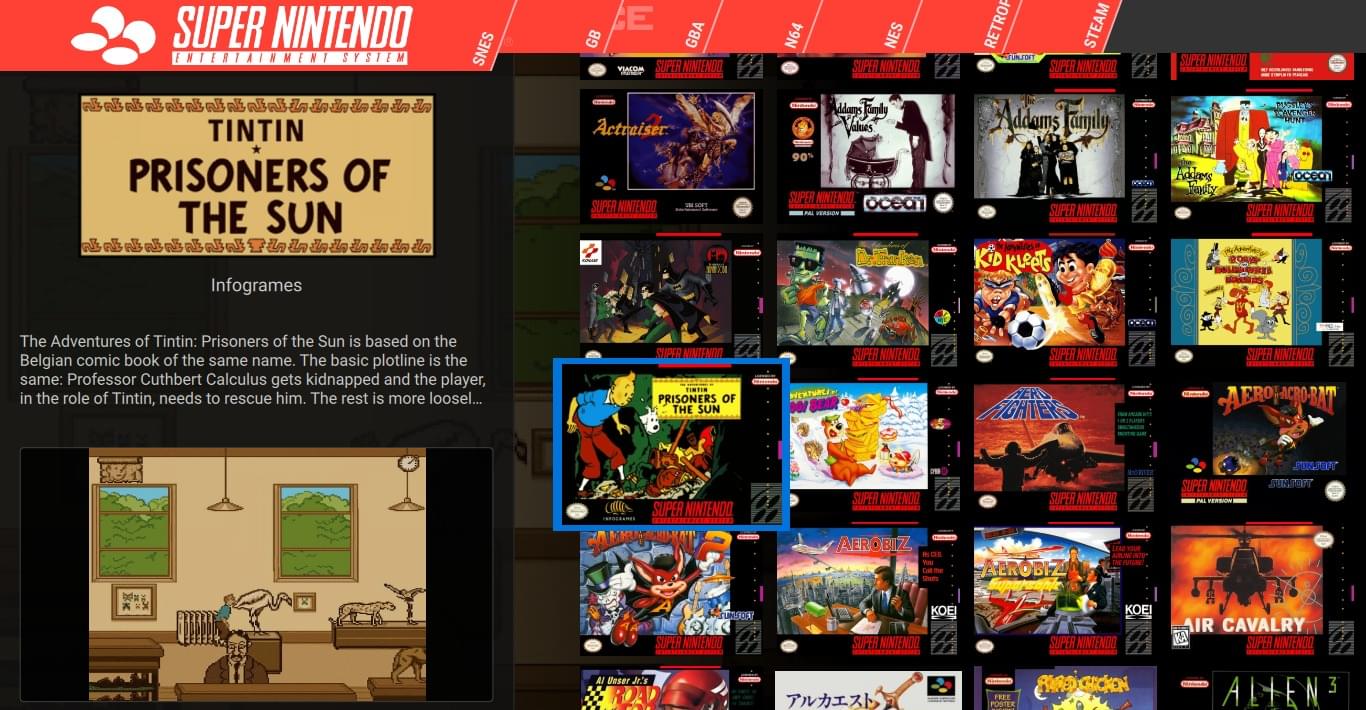
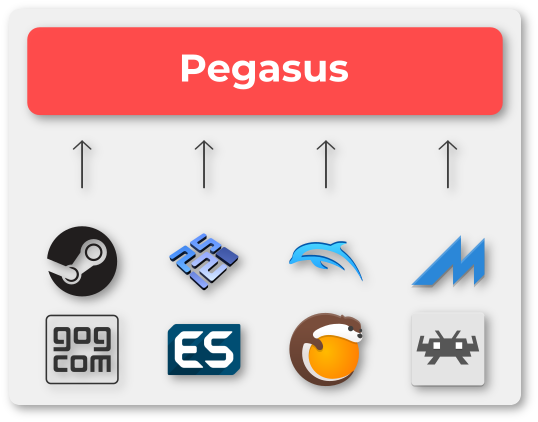
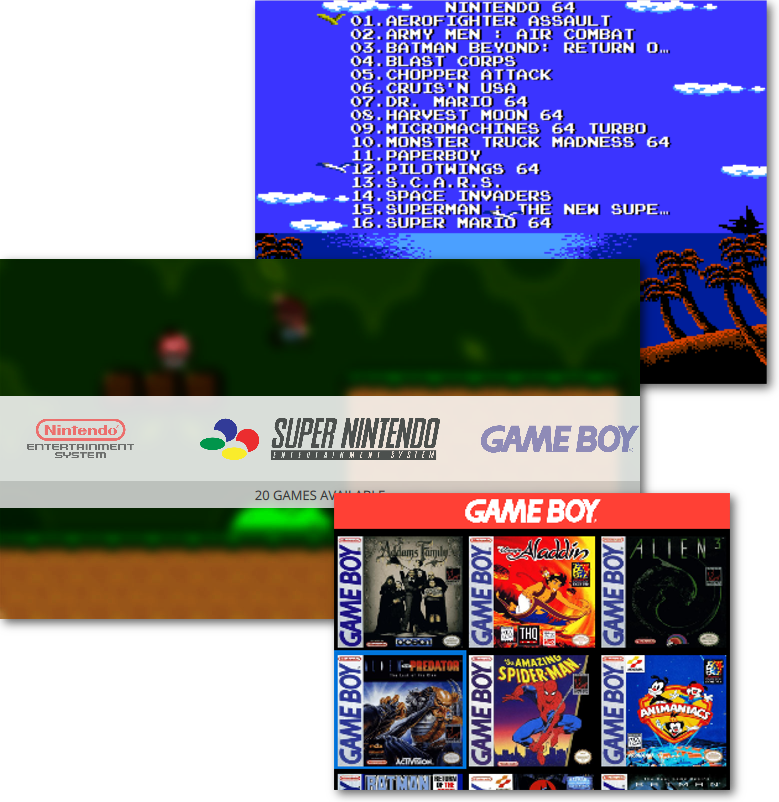
Pegasus is a graphical frontend for browsing your game library (especially retro games) and launching them from one place. It's focusing on customizability, cross platform support (including embedded devices) and high performance.
Instead of launching different games with different emulators one by one manually, you can add them to Pegasus and launch the games from a friendly graphical screen from your couch. You can add all kinds of artworks, metadata or video previews for each game to make it look even better!
With additional themes, you can completely change everything that is on the screen. Add or remove UI elements, menu screens, whatever. Want to make it look like Kodi? Steam? Any other launcher? No problem. You can add animations and effects, 3D scenes, or even run your custom shader code.
Pegasus can run on Linux, Windows, Mac, Raspberry Pi, Odroid and Android devices. It's compatible with EmulationStation metadata and gamelist files, and instantly recognizes your Steam games!
This agony is the true subject of our meditation. The driver is a piece of time-sensitive contract software. It was written for a specific kernel, a specific USB stack, a specific era of interrupt requests. Modern operating systems have moved on. They speak a different dialect. The RN-10D, plugged into a USB port on Windows 11, will still move the cursor—thanks to the universal HID (Human Interface Device) driver—but its soul is gone. You cannot map the middle button. You cannot adjust the wheel’s notchiness. The driver, the key to its full self, has been rendered obsolete by the very progress it once enabled. So what is the A4Tech RN-10D driver? It is a ghost. A necessary ghost for a brief window of time (2005–2010). It represents the fragile, ephemeral nature of our relationship with devices. We think of hardware as permanent—a mouse will click until its microswitch fails—but its functionality is hostage to software. When the driver dies, the hardware enters a state of half-life. It works, but it dreams of the extra features it can no longer access.
In this, the RN-10D driver is a metaphor for all legacy technology. It reminds us that every tool is also a text, requiring an interpreter. And when the interpreter is lost to time, the tool becomes a fossil—interesting, perhaps still useful in a basic sense, but no longer able to speak its full language. A4tech Rn-10d Driver
The driver unlocked the persona of the device. It allowed you to reprogram the middle button, adjust the double-click speed to a pace that matched your particular anxiety, and—the hallmark of the era—customize the scrolling speed. To adjust these parameters was to engage in a tactile dialogue with the machine. It was a low-stakes act of customization that felt, at the time, deeply empowering. You were not just a user; you were a configurator . Let us speak of the driver’s interface. If you have ever seen it, you will remember it: a grey, utilitarian window, devoid of skeuomorphic glamour, with tabs labeled "Buttons," "Wheel," and "Speed." There were no gradients, no animations, no help wizards. It was pure, unadorned function. In an era of Windows Vista’s glossy translucency, the A4Tech driver remained stubbornly, almost defiantly, Windows 95 in its visual language. This agony is the true subject of our meditation
In the grand narrative of technological progress, certain artifacts occupy a strange, liminal space. They are not the gleaming iPhones or the hallowed GPUs of gaming rigs. They are the silent, grey masses of peripherals: the office mouse. The A4Tech RN-10D is one such artifact. To write a "deep text" about its driver is not to praise bleeding-edge innovation, but to perform an act of digital archaeology—to unearth a relic from the era when hardware and software still negotiated their fragile alliance through a file you downloaded from a website that looked like it was built in 1998. The Driver as a Rosetta Stone The driver for the A4Tech RN-10D is more than a piece of software; it is a Rosetta Stone for understanding the early 2000s philosophy of computing. In an age of "plug-and-play" and automatic updates via the cloud, we forget that a driver was once a necessary translator. The RN-10D, a wired optical mouse of humble specifications (likely 800 or 1000 DPI, three buttons, and a scroll wheel), spoke a language that Windows XP or 7 did not natively fully understand. Without the driver, the mouse was a mute beast—functional, yes, but stripped of its identity. Modern operating systems have moved on


