Skip to content
  • Home
  • General
  • Guides
  • Reviews
  • News
Mobile logo

Breathedreamgo

The transformational travel guide

Below is the essay. Introduction In the mid-2000s, nature documentaries experienced a renaissance driven by high-definition cinematography, global distribution, and a growing public awareness of environmental degradation. Among these productions was Vida Salvaje (2006), a Spanish co-production that, though less famous than BBC’s Planet Earth , offered a poignant and visually arresting portrayal of Earth’s biodiversity. The file labeled 1742-Vida Salvaje -2006- 720p D S spa eng v.mkv points to a digital remnant of this work: a 720p video with dual Spanish and English audio tracks. This essay explores Vida Salvaje as a cultural and ecological artifact, examining its narrative structure, visual techniques, bilingual accessibility, and its role in early digital conservation media. 1. Context and Production Background Vida Salvaje (2006) was produced during a surge in wildlife filmmaking that followed the success of The Blue Planet (2001) and preceded Earth (2007). While major broadcasters like BBC and National Geographic dominated the English-speaking market, Spanish-language productions such as Vida Salvaje aimed to bring natural history to Latin American and Spanish audiences. The 2006 release likely consisted of multiple episodes, each focusing on a different biome: rainforests, deserts, oceans, and polar regions. The filename’s “1742” may denote an episode or series ID, while “D S” could indicate dual stereo audio or dubbed/subtitled versions. The presence of both Spanish and English audio reflects an intention for cross-cultural distribution—a nod to the growing globalization of educational content. 2. Visual Language and the 720p Threshold In 2006, 720p was considered high definition for broadcast television and early digital downloads. The resolution (1280×720 pixels) offered sharper detail than standard definition, allowing viewers to appreciate fur texture, insect wing patterns, and water reflections. Vida Salvaje likely utilized this format to immerse audiences in close-up sequences of predators hunting, birds migrating, and plants unfurling. The shift from SD to HD in nature documentaries was not merely technical; it altered the emotional relationship between viewer and subject. An iguana’s eye or a jaguar’s muscle movement became visceral, fostering empathy. The file’s preservation at 720p suggests it was shared via peer-to-peer networks or digital archives, highlighting how conservation films found second lives online—sometimes outside official distribution channels. 3. Narrative Themes: Struggle, Adaptation, and Fragility Though no script is available, the title Vida Salvaje (“Wildlife”) emphasizes unmanaged, autonomous nature. A typical episode would contrast the resilience of species—like the camel in the Atacama Desert or the snow leopard in the Himalayas—with their vulnerability to habitat loss. Unlike later documentaries that directly confront climate change, Vida Salvaje (2006) still operated within a “wonder and awe” framework, occasionally hinting at human impact through shots of deforestation or poaching, but without overt activism. This was both a strength and a limitation: it educated without alarming, but it also avoided the urgent tone that would define later works like Our Planet (2019). 4. Bilingual Audio: Democratizing Natural History The dual audio tracks (Spanish and English) are crucial to understanding the documentary’s reach. English narration often conveys scientific authority, while Spanish narration makes the content accessible to over 500 million Spanish speakers. This bilingual approach was progressive in 2006, anticipating Netflix’s multilingual strategies. The voice actors likely adapted not just language but cultural references—for example, explaining migration patterns using analogies familiar to Andean farmers versus Midwestern Americans. In this way, Vida Salvaje became a tool for environmental education in schools across Spain, Mexico, Colombia, and Argentina. The “D S” in the filename may also indicate descriptive stereo for visually impaired audiences, further broadening inclusivity. 5. Conservation Message: Embedded, Not Explicit Unlike the shock tactics of later documentaries (e.g., the walrus falling off a cliff in Our Planet ), Vida Salvaje relied on implicit conservation ethics. By showing the interdependence of species—ants and acacia trees, sharks and coral reefs—the film suggested that disrupting one element collapses the whole. The emotional peak was often a predator’s successful hunt or a newborn surviving the first night. These moments celebrated life’s tenacity while reminding viewers that such dramas are increasingly staged on shrinking stages. The final episode likely concluded with a call to protect “these last wild places,” though without specific policy demands. This gentle approach matched the mid-2000s zeitgeist, where Al Gore’s An Inconvenient Truth (2006) was just beginning to shift public opinion. 6. The Digital Afterlife: MKV and File Sharing The filename’s “.mkv” container (Matroska) is significant. MKV is open-source, supports multiple audio tracks and subtitles, and became popular among file-sharers in the late 2000s. The presence of 1742-Vida Salvaje -2006- 720p D S spa eng v.mkv on a hard drive or torrent site indicates that this documentary circulated beyond its original broadcast. For many viewers in regions without access to Discovery Channel or National Geographic, such files were the only window into exotic ecosystems. This raises ethical questions: piracy undermines production funding, but it also democratizes knowledge. In the case of nature documentaries, the educational benefit may outweigh commercial harm, especially for works no longer in print. The file’s longevity—still playable today—contrasts with the ephemeral nature of streaming rights, preserving Vida Salvaje for future audiences. 7. Critique and Legacy Critically, Vida Salvaje was not revolutionary. It borrowed narrative tropes from David Attenborough’s playbook: “Here, in the endless savanna…” followed by a slow zoom into a termite mound. Its visual effects and aerial shots, while good for 2006, lacked the cinematic drone footage of later decades. However, its value lies in its accessibility and timing. Released just as YouTube was taking off (founded 2005), Vida Salvaje clips may have been among the first wildlife videos viewed in 240p on school computers. It bridged the era of broadcast natural history and the age of viral animal videos. Moreover, by offering Spanish and English audio, it resisted the Anglocentrism of the genre, reminding us that conservation is a global conversation. Conclusion The file 1742-Vida Salvaje -2006- 720p D S spa eng v.mkv is more than a string of technical metadata. It is a portal to a specific moment in media and environmental history—a 2006 Spanish-language nature documentary that sought to inspire wonder, educate bilingually, and nudge viewers toward ecological awareness. Its 720p resolution, once cutting-edge, now feels retro, yet its core message remains urgent: wildlife is not a spectacle to consume but a heritage to protect. As we face the sixth mass extinction, documentaries like Vida Salvaje remind us that the first step in saving nature is seeing it clearly—in any language, at any resolution, with an open heart. If you intended the filename as a literal essay prompt (e.g., analyzing the metadata itself as a cultural artifact), please clarify, and I can provide a revised essay focusing on digital archiving, piracy, and file-naming conventions.

This filename corresponds to a video file — likely a documentary or film titled Vida Salvaje (Spanish for "Wildlife") from 2006, possibly a nature documentary series episode (e.g., from Planeta Salvaje or Wildlife ). However, the filename itself is not a topic for an essay, but a metadata label.

To fulfill your request properly, I will interpret it as:

1742-Vida Salvaje -2006- 720p D S spa eng v.mkv
Breathedreamgo is an award-winning travel site published by Canadian travel writer and India travel expert Mariellen Ward. Breathedreamgo was launched in 2009 and focuses on transformative travel, travel in India, travel in Canada, responsible travel, and solo female travel.

Search

Newsletter Form Sidebar

Sign up for BREATHEDREAMGO DISPATCHES and get inspiration to live your travel dreams.

Sign up now and get a free copy of SONG OF INDIA.


Plan your dream trip to India!

Enquire about INDIA FOR BEGINNERS custom tours from BreatheDreamGo

Plan Your Trip

Featured by

1742-Vida Salvaje -2006- 720p D S spa eng v.mkv

Recent Posts

  • File
  • Madha Gaja Raja Tamil Movie Download Kuttymovies In
  • Apk Cort Link
  • Quality And All Size Free Dual Audio 300mb Movies
  • Malayalam Movies Ogomovies.ch
Pin On Pinterest
1742-Vida Salvaje -2006- 720p D S spa eng v.mkv
Related Posts

1742-vida Salvaje -2006- 720p D S Spa Eng V.mkv đź’Ż

Below is the essay. Introduction In the mid-2000s, nature documentaries experienced a renaissance driven by high-definition cinematography, global distribution, and a growing public awareness of environmental degradation. Among these productions was Vida Salvaje (2006), a Spanish co-production that, though less famous than BBC’s Planet Earth , offered a poignant and visually arresting portrayal of Earth’s biodiversity. The file labeled 1742-Vida Salvaje -2006- 720p D S spa eng v.mkv points to a digital remnant of this work: a 720p video with dual Spanish and English audio tracks. This essay explores Vida Salvaje as a cultural and ecological artifact, examining its narrative structure, visual techniques, bilingual accessibility, and its role in early digital conservation media. 1. Context and Production Background Vida Salvaje (2006) was produced during a surge in wildlife filmmaking that followed the success of The Blue Planet (2001) and preceded Earth (2007). While major broadcasters like BBC and National Geographic dominated the English-speaking market, Spanish-language productions such as Vida Salvaje aimed to bring natural history to Latin American and Spanish audiences. The 2006 release likely consisted of multiple episodes, each focusing on a different biome: rainforests, deserts, oceans, and polar regions. The filename’s “1742” may denote an episode or series ID, while “D S” could indicate dual stereo audio or dubbed/subtitled versions. The presence of both Spanish and English audio reflects an intention for cross-cultural distribution—a nod to the growing globalization of educational content. 2. Visual Language and the 720p Threshold In 2006, 720p was considered high definition for broadcast television and early digital downloads. The resolution (1280×720 pixels) offered sharper detail than standard definition, allowing viewers to appreciate fur texture, insect wing patterns, and water reflections. Vida Salvaje likely utilized this format to immerse audiences in close-up sequences of predators hunting, birds migrating, and plants unfurling. The shift from SD to HD in nature documentaries was not merely technical; it altered the emotional relationship between viewer and subject. An iguana’s eye or a jaguar’s muscle movement became visceral, fostering empathy. The file’s preservation at 720p suggests it was shared via peer-to-peer networks or digital archives, highlighting how conservation films found second lives online—sometimes outside official distribution channels. 3. Narrative Themes: Struggle, Adaptation, and Fragility Though no script is available, the title Vida Salvaje (“Wildlife”) emphasizes unmanaged, autonomous nature. A typical episode would contrast the resilience of species—like the camel in the Atacama Desert or the snow leopard in the Himalayas—with their vulnerability to habitat loss. Unlike later documentaries that directly confront climate change, Vida Salvaje (2006) still operated within a “wonder and awe” framework, occasionally hinting at human impact through shots of deforestation or poaching, but without overt activism. This was both a strength and a limitation: it educated without alarming, but it also avoided the urgent tone that would define later works like Our Planet (2019). 4. Bilingual Audio: Democratizing Natural History The dual audio tracks (Spanish and English) are crucial to understanding the documentary’s reach. English narration often conveys scientific authority, while Spanish narration makes the content accessible to over 500 million Spanish speakers. This bilingual approach was progressive in 2006, anticipating Netflix’s multilingual strategies. The voice actors likely adapted not just language but cultural references—for example, explaining migration patterns using analogies familiar to Andean farmers versus Midwestern Americans. In this way, Vida Salvaje became a tool for environmental education in schools across Spain, Mexico, Colombia, and Argentina. The “D S” in the filename may also indicate descriptive stereo for visually impaired audiences, further broadening inclusivity. 5. Conservation Message: Embedded, Not Explicit Unlike the shock tactics of later documentaries (e.g., the walrus falling off a cliff in Our Planet ), Vida Salvaje relied on implicit conservation ethics. By showing the interdependence of species—ants and acacia trees, sharks and coral reefs—the film suggested that disrupting one element collapses the whole. The emotional peak was often a predator’s successful hunt or a newborn surviving the first night. These moments celebrated life’s tenacity while reminding viewers that such dramas are increasingly staged on shrinking stages. The final episode likely concluded with a call to protect “these last wild places,” though without specific policy demands. This gentle approach matched the mid-2000s zeitgeist, where Al Gore’s An Inconvenient Truth (2006) was just beginning to shift public opinion. 6. The Digital Afterlife: MKV and File Sharing The filename’s “.mkv” container (Matroska) is significant. MKV is open-source, supports multiple audio tracks and subtitles, and became popular among file-sharers in the late 2000s. The presence of 1742-Vida Salvaje -2006- 720p D S spa eng v.mkv on a hard drive or torrent site indicates that this documentary circulated beyond its original broadcast. For many viewers in regions without access to Discovery Channel or National Geographic, such files were the only window into exotic ecosystems. This raises ethical questions: piracy undermines production funding, but it also democratizes knowledge. In the case of nature documentaries, the educational benefit may outweigh commercial harm, especially for works no longer in print. The file’s longevity—still playable today—contrasts with the ephemeral nature of streaming rights, preserving Vida Salvaje for future audiences. 7. Critique and Legacy Critically, Vida Salvaje was not revolutionary. It borrowed narrative tropes from David Attenborough’s playbook: “Here, in the endless savanna…” followed by a slow zoom into a termite mound. Its visual effects and aerial shots, while good for 2006, lacked the cinematic drone footage of later decades. However, its value lies in its accessibility and timing. Released just as YouTube was taking off (founded 2005), Vida Salvaje clips may have been among the first wildlife videos viewed in 240p on school computers. It bridged the era of broadcast natural history and the age of viral animal videos. Moreover, by offering Spanish and English audio, it resisted the Anglocentrism of the genre, reminding us that conservation is a global conversation. Conclusion The file 1742-Vida Salvaje -2006- 720p D S spa eng v.mkv is more than a string of technical metadata. It is a portal to a specific moment in media and environmental history—a 2006 Spanish-language nature documentary that sought to inspire wonder, educate bilingually, and nudge viewers toward ecological awareness. Its 720p resolution, once cutting-edge, now feels retro, yet its core message remains urgent: wildlife is not a spectacle to consume but a heritage to protect. As we face the sixth mass extinction, documentaries like Vida Salvaje remind us that the first step in saving nature is seeing it clearly—in any language, at any resolution, with an open heart. If you intended the filename as a literal essay prompt (e.g., analyzing the metadata itself as a cultural artifact), please clarify, and I can provide a revised essay focusing on digital archiving, piracy, and file-naming conventions.

This filename corresponds to a video file — likely a documentary or film titled Vida Salvaje (Spanish for "Wildlife") from 2006, possibly a nature documentary series episode (e.g., from Planeta Salvaje or Wildlife ). However, the filename itself is not a topic for an essay, but a metadata label. 1742-Vida Salvaje -2006- 720p D S spa eng v.mkv

To fulfill your request properly, I will interpret it as: Below is the essay
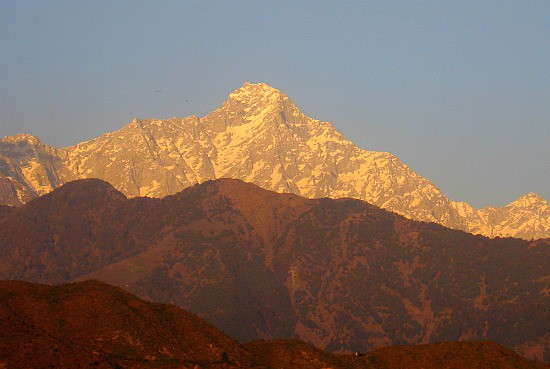
Photogrpah of Dharamsala Himalayas

11 reasons to visit India in the summer

View Post
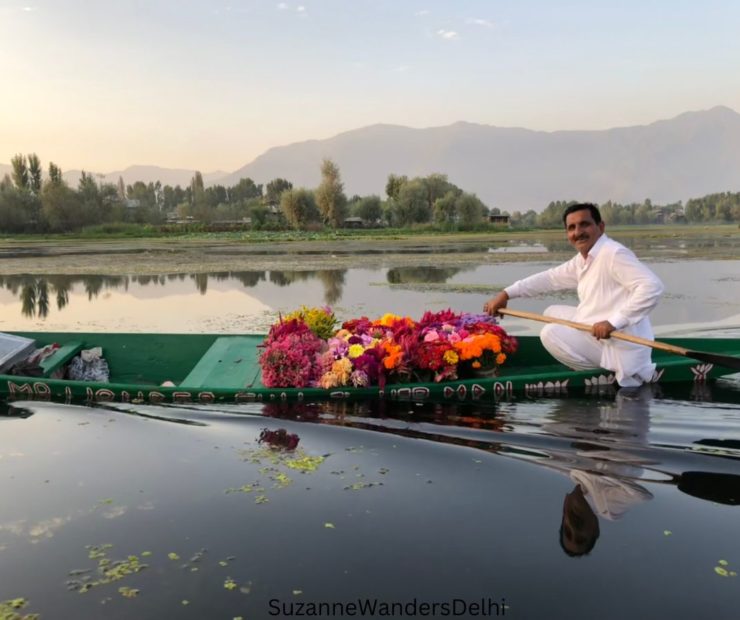
flower seller on Dal lake in Kashmir

10 New places to go in India 2023

View Post
Filed under: India, Vietnam, Philippines, IndonesiaTagged under: India, monsoon, Travel, travel tip, destinations, Bali, Vietnam, philippines, Indonesia, monsoon travel, rainy season, Mexico
1742-Vida Salvaje -2006- 720p D S spa eng v.mkv
About Mariellen Ward

Professional travel writer Mariellen Ward is the founder of award-winning Breathedreamgo. Mariellen has a BA in Journalism and has been travel writing and blogging since 2005. She has won many awards, including a National Tourism Award from Incredible India Tourism, and writes for some of the world’s leading publications including BBC Travel and NatGeo Traveller India.

Sign up for my newsletter and get
inspiration to live your travel dreams

Newsletter Form Page

Work with us

  • Work with us
  • Media kit
  • Testimonials

More information

  • Contact us
  • About Breathedreamgo
  • About Mariellen
  • Disclosure and Privacy Policy

Newsletter

Newsletter Form Footer

1742-Vida Salvaje -2006- 720p D S spa eng v.mkv

Copyright © 2026 — Lively Modern Realm
Site by Assistant

We use cookies to give you a better web experience and assume you're on board if you continue browsing this site. To find out about our cookie policy, please visit our Disclosure and Privacy Policy page. Accept Reject
Privacy & Cookies Policy

Privacy Overview

This website uses cookies to improve your experience while you navigate through the website. Out of these, the cookies that are categorized as necessary are stored on your browser as they are essential for the working of basic functionalities of the website. We also use third-party cookies that help us analyze and understand how you use this website. These cookies will be stored in your browser only with your consent. You also have the option to opt-out of these cookies. But opting out of some of these cookies may affect your browsing experience.
Necessary
Always Enabled
Necessary cookies are absolutely essential for the website to function properly. This category only includes cookies that ensures basic functionalities and security features of the website. These cookies do not store any personal information.
Non-necessary
Any cookies that may not be particularly necessary for the website to function and is used specifically to collect user personal data via analytics, ads, other embedded contents are termed as non-necessary cookies. It is mandatory to procure user consent prior to running these cookies on your website.
SAVE & ACCEPT